
For years, teams across the Idaho Transportation Department did their best to plan and track their work using whatever tools they had on hand. Some built roadmaps in Excel. Others relied on Azure DevOps, Visio diagrams, or hand-made templates that made sense only to the people who created them. Each format told part of the story, but none of them showed the whole picture. And as the organization grew more complex, the gaps between those pieces became harder to ignore.
Without a shared, clear roadmap, business units often pursued IT goals with good intentions…and missing information. Projects overlapped, priorities drifted, resources were stretched thin, and occasionally, decisions were made outside of IT that created costly rework later. Everyone was trying to move the organization forward, but they weren’t always moving in the same direction.
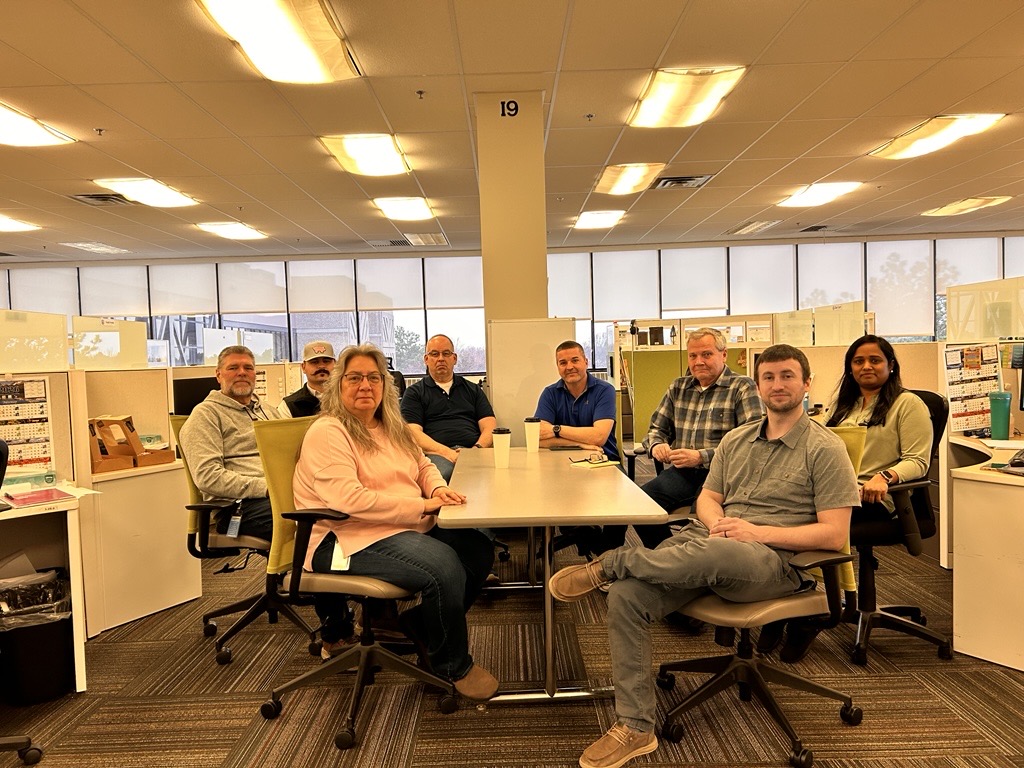
The ETS Business Engagement team recognized a clear pattern emerging, and they knew something had to change. Led by team members Michael Crechriou, Brenda Haskell, Jim Carr, Sangeetha Natarajan, Brad Stallings, and Colton Cubbage, the team set out to standardize and simplify the ITD approach. If ITD wanted to deliver on its mission, it needed a unified way to plan, communicate, and align its tech project work. It needed a roadmap that wasn’t just a document, but a strategic tool. “This would help us shift from a reactive to a proactive planning approach,• said Will Miller, Business Engagement Team Manager.
So ETS teams came together and built a new approach using a cloud-based software, Roadmunk. The goal was simple: one standard, one format, one source of truth for every IT roadmap in the organization. The shift was immediate! Roadmunk replaced the patchwork of outdated tools with a single, intuitive platform that gives every team a clear view of their initiatives and how they connect to ITD’s mission. “Roadmaps that once took hours to update can now be refreshed and updated in minutes•, said Jim Carr, one of the Automated Systems Managers leading the effort. “Teams no longer wonder whether they’re working from the latest version•, and business leaders finally have real-time visibility into timelines, dependencies, and strategic value. The impact has been significant.
Roadmaps are now directly tied to ITD’s mission objectives, making prioritization smarter and more defensible. Time spent creating and updating roadmaps has dropped by more than half. As a result of the effort, we have begun to see duplication decrease, resource allocation improve, and budgetary waste reduced. Most importantly, transparency has strengthened trust. Everyone can see the same information, at the same time, in the same format.
The cultural shift is just as meaningful as the technical one. Roadmaps are now starting to be shared, are accessible, and easy to understand. In the coming days, ETS will expand this new roadmapping approach across every division. The foundation is already in place, and adoption is expected to move quickly. As more teams join the shared framework, ITD will gain even greater agility, stronger cross-team engagement, and a clearer path toward long-term strategic execution. What began as a solution to a fragmented process has become something much bigger: a unified planning system that brings clarity, alignment, and confidence to the entire organization.