
Pedestrian Bridge Update
Recent emergency repair work will allow pedestrian access to resume across Long Bridge by late next week (7/17)
Overview
Project information
In December of 2024, the Idaho Transportation Board approved $200,000 to start studying replacement options for the Long Bridge on U.S. Highway 95 near Sandpoint. The study began in 2025, with the goal of seeking grant funding to finish the study and begin design. It would include public outreach and updating environmental evaluations.
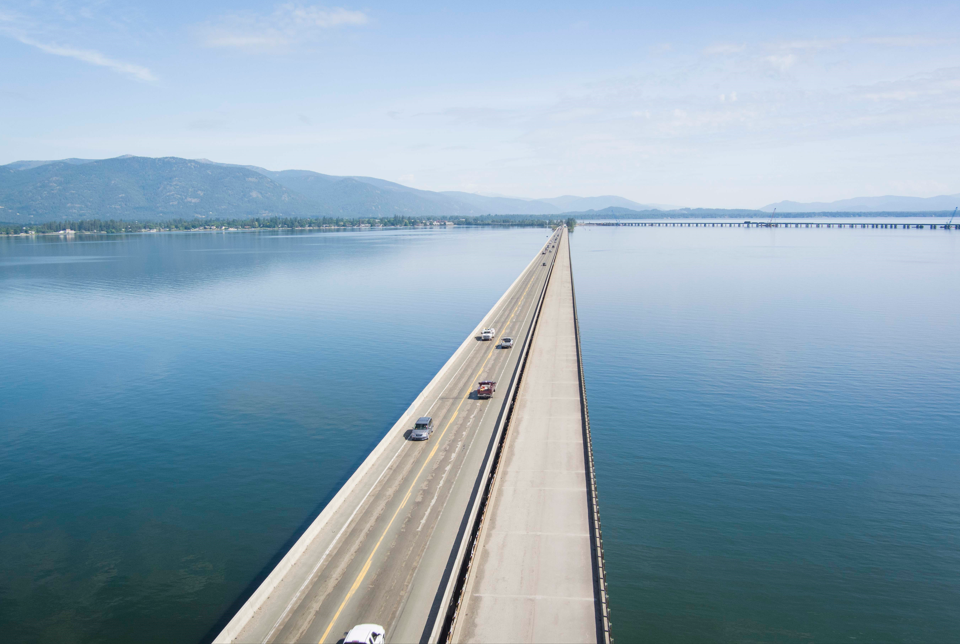
The existing bridges-one for vehicles, and the other for pedestrians-were built in 1981 and 1956 respectively. The pedestrian bridge, which originally served vehicles, is no longer able to safely carry traffic and is severely weight restricted.
Previous studies have identified one four-lane bridge with shoulders and a separated bike and pedestrian facility to replace the two existing two-lane bridges. Costs and staging would be identified in later studies, but the initial estimate for building the northbound half of the proposed structure, including a bike and pedestrian facility, is at least $225 million.
As the study progresses information about replacement options and future design and construction will be made available on this site.
This project will be separate from ongoing plans to expand US-95 through the Sagle corridor to make the highway safer and more capable of handling increased traffic between Sagle and Lakeshore Drive, though neither is funded for construction at this time.
Did you know?
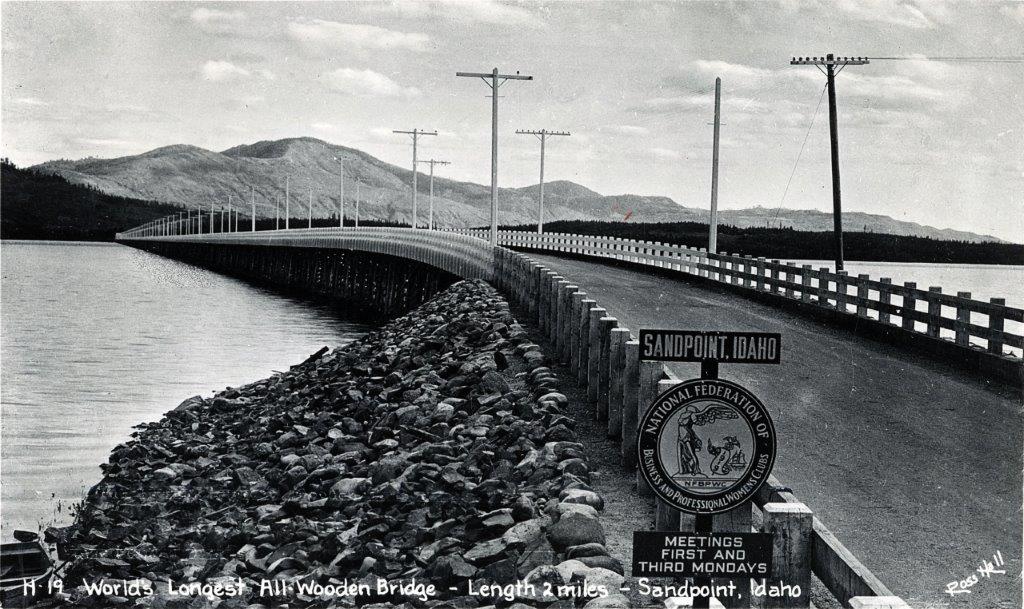
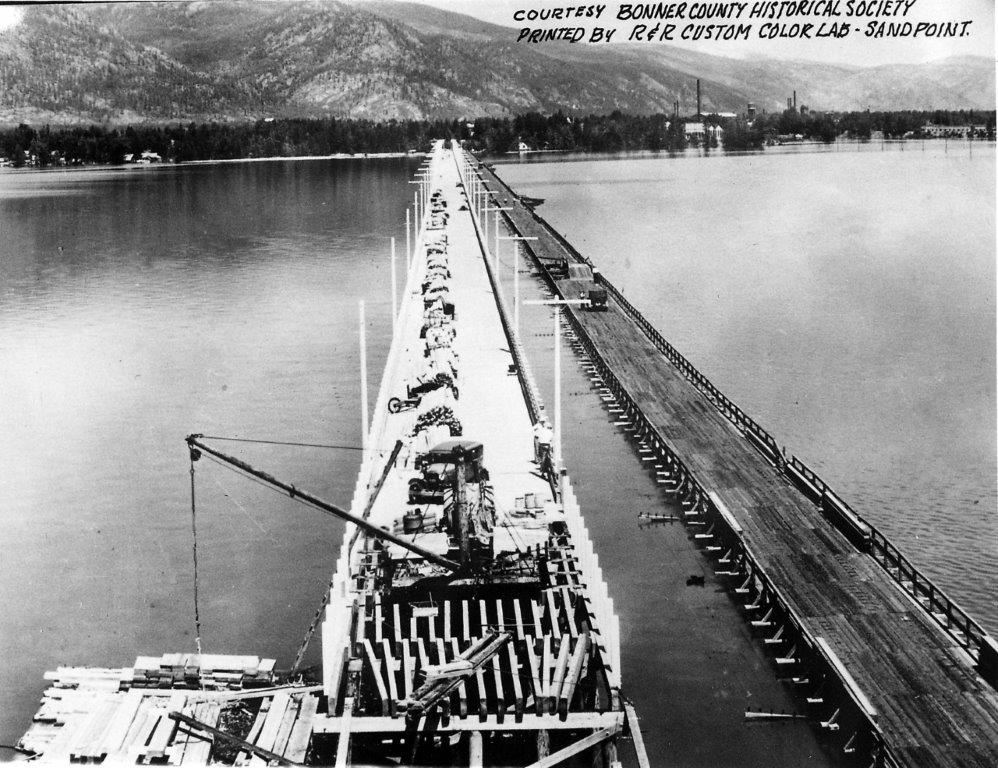
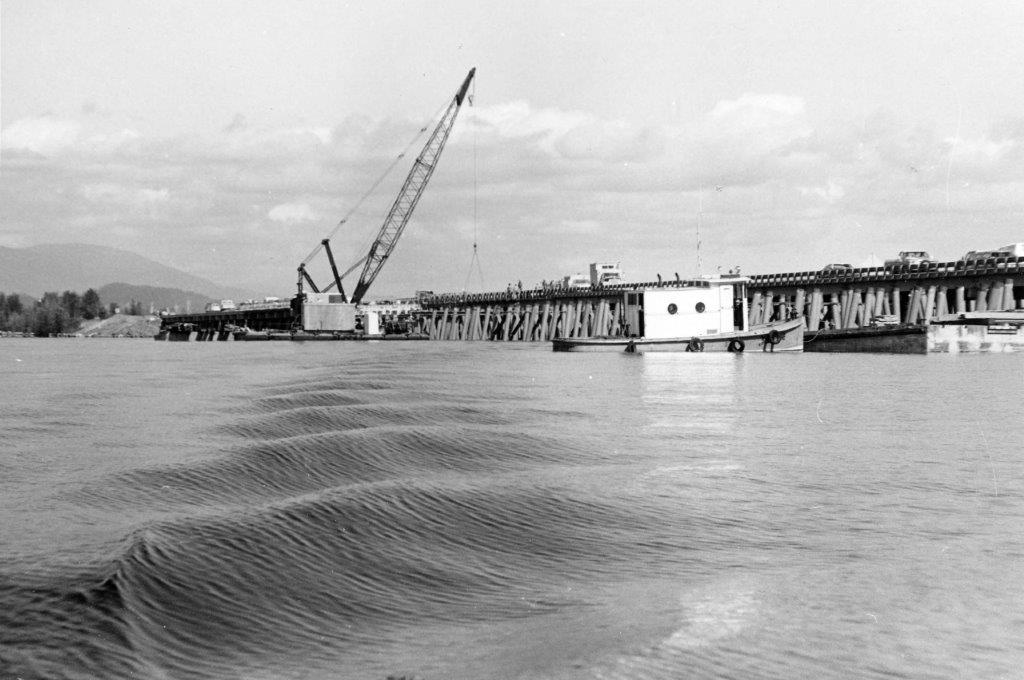
On May 26, 1908, the first piling for the wooden bridge was driven. When completed, the bridge was supported by 1,540 pilings and covered a distance of almost two miles. It was advertised as the longest wooden bridge in the world!
Timeline
The information below describes a brief history of some of the maintenance and major improvements that have been completed to maintain the Long Bridge since 1956, and will also include future planning and design milestones as the replacement study progresses.
-
1956
Original concrete bridge was constructed
-
1977
Bridge deck was resurfaced, expansion joints repaired, and guardrail repainted
-
1981
Original bridge was decommissioned as a vehicular bridge and converted into a pedestrian facility
-
1981
Construction began on the existing vehicular bridge
-
2008
Epoxy overlay on vehicular bridge surface
-
2015
Pile preservation pilot project and bridge deck overlay on vehicular bridge
-
2016
Pedestrian bridge joints sealed
-
2021
Vehicular bridge improvement project to replace joints, repair cracks, preserve piles, repair sea wall and replace navigation lighting
-
2021
Pedestrian bridge joint replacement and navigation lighting replacement.
-
2024
Epoxy overlay on vehicular bridge surface
-
2024
ITD Board approves funding to begin studying Long Bridge replacement options
-
2025
Long Bridge replacement study begins
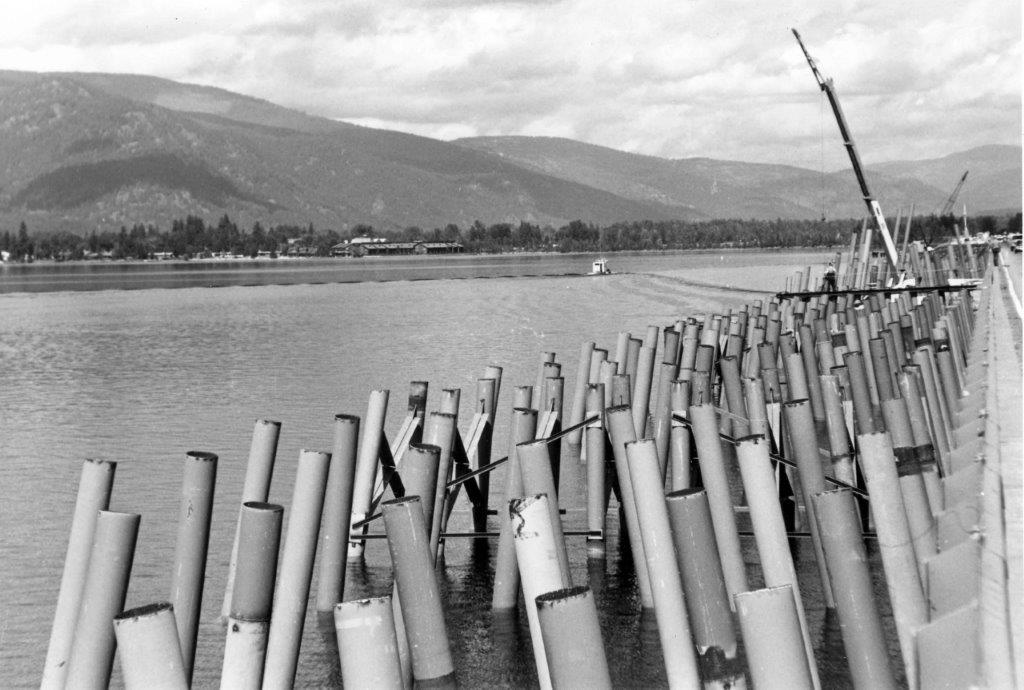
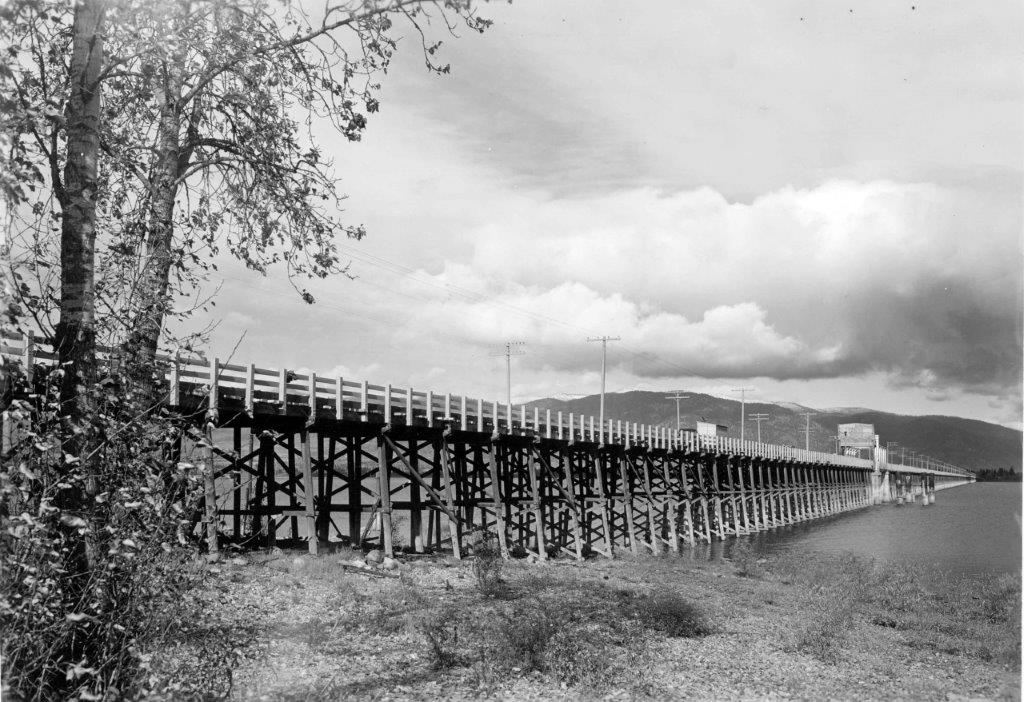
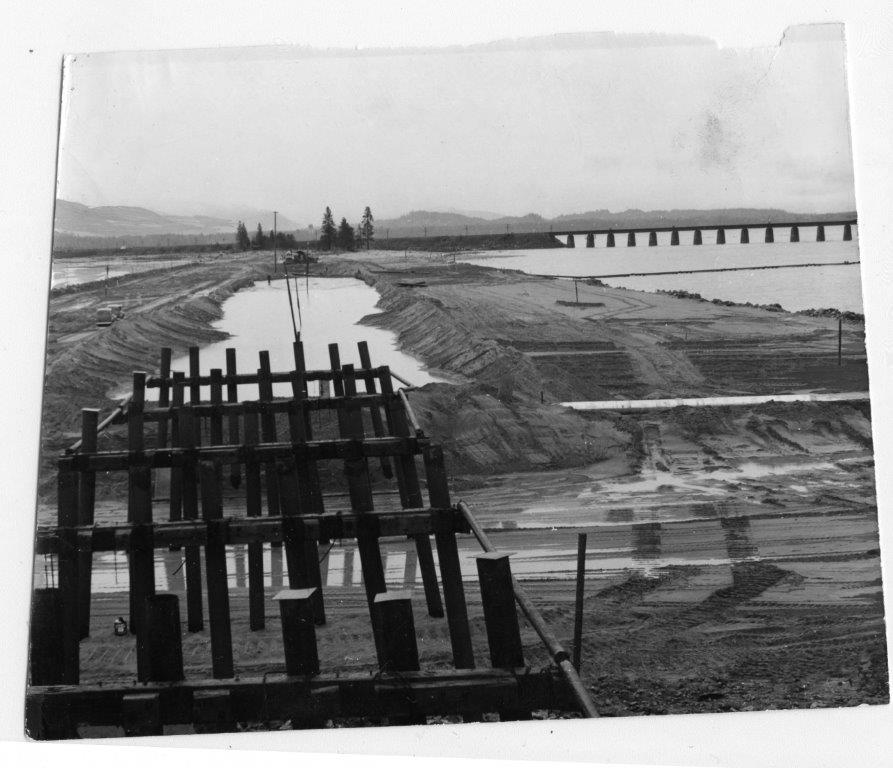
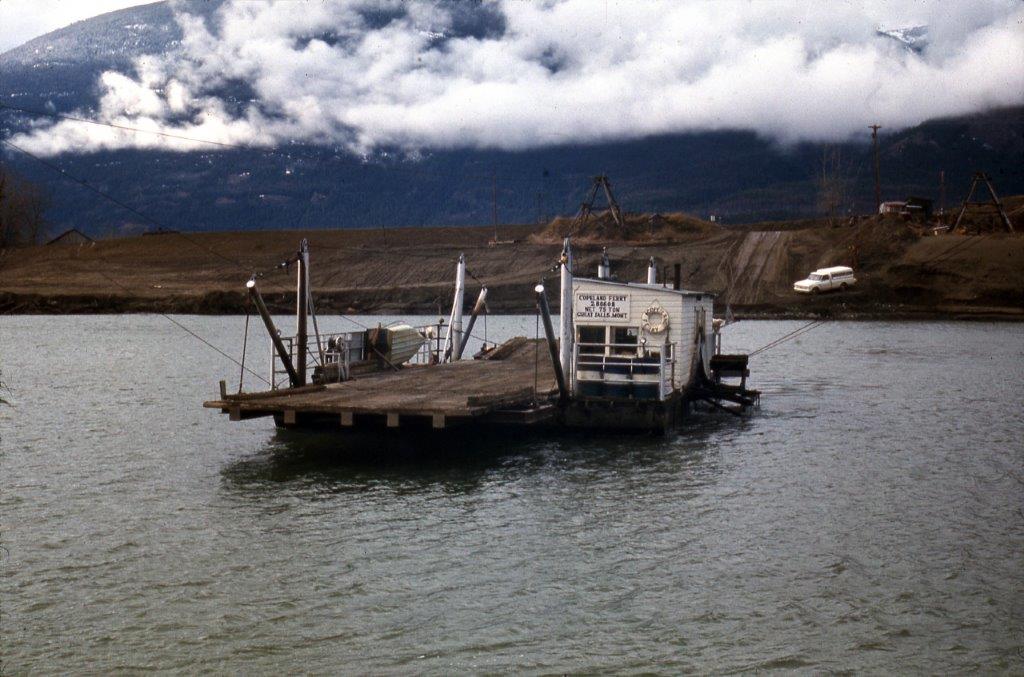
PEDESTRIAN BRIDGE
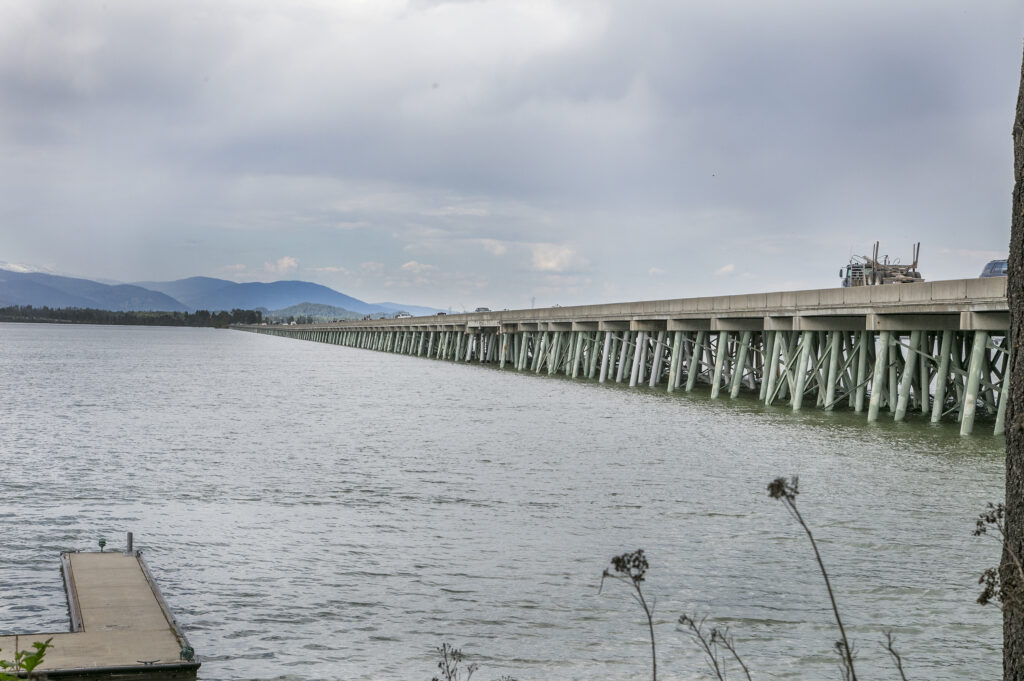
Although they run alongside one another, the pedestrian bridge and the adjacent US-95 vehicle bridge are two completely separate structures. Each bridge has its own history, inspection schedule, maintenance needs and long-term planning efforts.
The pedestrian bridge was originally built in 1956 as a vehicular bridge before being converted to exclusively-pedestrian and bicycle use in 1981 when the current vehicle bridge opened. Today, it provides an important connection between Sandpoint and Sagle for people walking, running and biking.
Like any bridge of its age, the pedestrian bridge requires regular inspections, ongoing maintenance and periodic repairs to remain safe for public use. As engineers continue to monitor the bridge’s condition, access may change over time as repairs are completed or new structural concerns are identified. Public safety will always remain the top priority in decisions about the bridge.
This page serves as the central source for information about the pedestrian bridge, including inspection updates, repair information, frequently asked questions, educational resources and future planning efforts. While the Long Bridge Replacement Study is evaluating long-term solutions for both the vehicle and pedestrian crossings, the existing pedestrian bridge will continue to be maintained and monitored for as long as it can safely remain in service.
Frequently Asked Questions About the Pedestrian Bridge
To understand why the bridge had to be temporarily closed, it helps to first understand how the structure is built.
The pedestrian bridge crosses Lake Pend Oreille on a series of supports, called piers, that rise from the water. The section of bridge between each pier is called a span.
The bridge contains 180 spans. Of those, 179 are supported by five reinforced concrete beams, called girders, that run beneath the walking surface.
Over time, water worked its way into the ends of some of these girders, causing the steel reinforcement inside the concrete to rust. As steel rusts, it expands, which can crack the surrounding concrete and weaken the area where each girder rests on its support.
One of the challenges with a bridge this size is the sheer number of locations that must be inspected and maintained. Each of the 179 spans contains five girders, and each girder has two ends, meaning there are 1,790 individual bearing points that engineers must inspect throughout the bridge.
Engineers have been monitoring and repairing these locations for decades. Repairs in the 1980s added timber blocking to help distribute loads, and additional steel bracing was installed in 2015.
During a detailed hands-on inspection in 2026, engineers identified several locations where deterioration had progressed to the point that the bridge could no longer safely remain open. The bridge was temporarily closed so engineers could fully evaluate the condition of the structure and crews could install new structural steel bracing beneath the most critical locations.
Those repairs were focused on restoring safe end-to-end pedestrian access, not on repairing every deteriorated area on the bridge. Crews reinforced the locations where the structural condition posed the greatest risk, allowing the bridge to safely reopen with a restricted pedestrian pathway that avoids areas where additional repairs are still needed.
Because the pedestrian bridge is a 70-year-old structure, it will continue to require regular inspections, maintenance and repairs. As engineers monitor its condition over time, additional repairs, changes to pedestrian access or temporary closures may be necessary to keep the bridge safe for public use.
There are no plans to reopen the pedestrian bridge to public vehicle traffic.
However, ITD is evaluating whether future repairs could allow the structure to support limited authorized vehicle access if the adjacent US-95 bridge is closed due to an incident. This could also include supporting specialized equipment and vehicles used for future bridge inspections, repairs, and maintenance.
The pedestrian bridge is nearly 70 years old and requires ongoing monitoring, maintenance and repairs. Like all bridges, it has a finite service life, and at some point, will need to be replaced rather than continuously repaired.
As part of long-term planning, ITD has recently applied for funding to continue early-stage engineering work, including geotechnical studies and conceptual design alternatives. This work helps evaluate what future options could look like for the corridor and the bridge system as a whole.
If a replacement structure is ultimately built in the future, it would be designed to meet current engineering and design standards. That typically means a more compact footprint than the existing pedestrian bridge, with physically separated space for pedestrians and bicycles alongside vehicle traffic, rather than the wide, repurposed structure in place today.
At this stage, no decisions have been made about design or configuration. Long-term planning is simply part of responsible infrastructure management for a corridor of this size, importance, and age.
ITD encourages community members to participate in the public comment period for the Idaho Transportation Investment Program (ITIP), which runs annually, July 1–31.
The ITIP helps guide how transportation funding is prioritized across the state from year to year over a 7-year planning cycle. Comments are not limited to projects already included in the program. Community members may provide feedback on transportation needs, priorities, and future investments, including the Long Bridge pedestrian path.
Information about how to participate and submit feedback is available on ITD’s website.
Contact the project team
For questions or comments about this project, please contact the project manager at carrieann.hewitt@itd.idaho.gov or (208) 772-1200.