
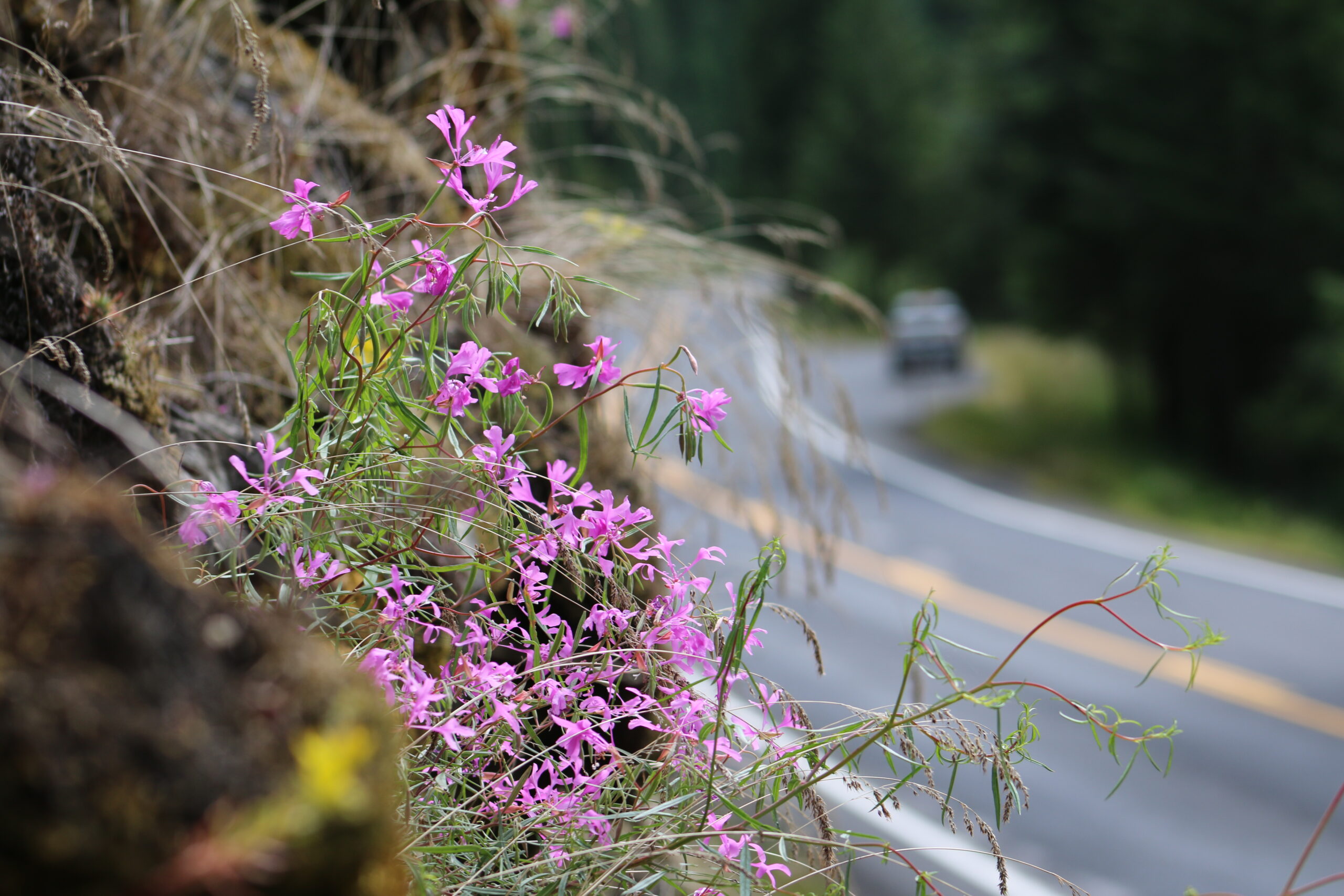
ITD uses environmentally beneficial landscaping which includes native plant species and utilizing techniques that complement and enhance the local environment and seek to minimize the adverse effects that landscaping has on it. It also provides a framework for preventing the introduction of and controlling the spread of invasive plant species on highway rights of way.
ITD Roadside Vegetation Guide
This map tool provides information for ITD staff and contractors to assist in planning and scheduling roadside vegetation management tasks.
Programs
Invasive species are harmful, non-native plants, animals, and pathogens that can damage or harm our economy, environment, and native ecosystems. Non-native invasive species have significant economic and environmental impacts in the United States. Studies show that economic losses caused by non-native invasive species exceed $138 billion annually. Invasives can move into and dominate both natural and managed systems by altering habitats and disrupting the ability of those systems to function sustainably. They are highly competitive, persistent, and can create monocultures that will alter or destroy Idaho’s diverse biological landscape. When a non-native becomes invasive, it escapes its original or intended ecological niche and enters habitats where it may grow and spread uncontrollably.
Resources
Noxious weeds are spreading at an alarming rate across the Western United States. Each year approximately $138 billion is lost nationwide due to invasive plant impacts to agriculture, industry, recreation, and the environment. In addition, invasive plants are invading about 4,600 acres of land daily with over 8 million acres of Idaho lands severely infested by one of the 35 state-designated noxious weeds.
ITD Integrated Vegetative Management (IVM) program applies specific guidelines and complies with federal, state and local noxious weed laws to effectively eliminate, control and manage the spread of noxious weeds.
ITD is currently using environmentally beneficial landscaping which includes utilizing techniques that complement and enhance the local environment and seek to minimize the adverse effects that landscaping has on it. It also provides a framework for preventing the introduction of and controlling the spread of invasive plant species on highway rights-of-way.
Some of these techniques and equipment include selective herbicide applications, brush control or removal, promoting native or adaptable vegetation, reseeding disturbed areas, bio-control agents and delivery systems, more efficient equipment cleaners, improved seeding equipment (for steep slopes), Global Positioning System (GPS) for invasive population inventories, and methods to minimize soil disturbance during vegetation management activities.
Resources
-
County Contacts
Wildflowers and other native plants provide visual character that enhances the natural scenic beauty of our state’s landscape. The growing concern for our natural heritage has generated an increasing interest in their restoration, preservation, and appreciation.
Our highways provide access to the splendors of nature as well as offer opportunities for natural beauty within their rights-of-way. The “Operation Wildflower• program and the Surface Transportation and Uniform Relocation Assistance Act of 1987 (STURAA) initiated the use of native wildflowers and other native vegetation along the rights-of-way to add natural character and diversity to the highway environment. These programs are the framework of Idaho Transportation Department’s wildflower and native habitat restoration programs.
The Safe Accountable Flexible Efficient Transportation Equity Act (SAFETEA-LU) enacted in 2005, provides flexible funding that can be used for projects on any Federal-aid highway, including the NHS, bridge projects on any public road, transit capital projects, and public bus terminals and facilities and is eligible for federal-aid funds to be used for the control of land and aquatic noxious weeds and the establishment of native species.
MAP-21 is the first long-term highway authorization enacted since 2005 SAFETEA-LU. MAP-21 represents a milestone for the U.S. economy and provides needed funds and transforms the policy and programmatic framework for investments to guide the growth and development of the country’s vital transportation infrastructure.
Executive Order 13514 directs Federal agencies to establish goals for conserving water resources on Federal facilities including potable, industrial, landscaping, and agricultural water. Agencies are strongly encouraged to develop and maintain a comprehensive sustainable landscape plan.
The Infrastructure Bill (H.R.3684) became law in 2022, directs the Secretary to establish a program and provide funding for eligible entities and projects to carry out activities to benefit pollinators on roadsides and highway rights-of-way, including the planting and seeding of native, locally-appropriate grasses and wildflowers, including milkweed. Since 2001, ITD’s native plant program has reintroduced native species to thousands of road miles and incorporated native species into seed mixes and revegetation activities. Using native plants enhances biodiversity, preserves natural habitats, and restores native wildlife habitats.
Transportation planning and project development must reflect the desires of communities and consider the impacts on both the natural and human environments. Transportation projects are closely looked at to see how they might impact the community, the natural environment, and our health and welfare.
Seed Zones & Native Plants
Native plant communities are essential to ecosystem integrity and diversity. Highways provide access to the splendors of nature as well as offer opportunities for pollinators and natural beauty within the rights-of-way. The “Operation Wildflower” program and the Surface Transportation and Uniform Relocation Assistance Act of 1987 (STURAA) initiated the use of native wildflowers and other native vegetation along the rights-of-way to enhance biodiversity to the highway environment. These programs are the framework of Idaho Transportation Department’s wildflower and native habitat restoration programs.
Since 2001, ITD’s native plant program reintroduced native species to thousands of road miles and incorporated native species into seed mixes and revegetation activities. Using native plants enhances biodiversity, preserves natural habitats, and restores native wildlife habitats.
In 2014, a Presidential Memorandum was initiated creating a federal strategy to promote the health of honey bees and other pollinators. The Presidential Memorandum supports the use of native plants beneficial to pollinators and empowers land managers to engage in strategies and partnerships to improve landscapes, rangelands, and forests as well as increase and enhance pollinator habitats on a national level.
Resources
Pollinators are important components of our overall ecosystem health, as well as important contributors to agricultural production. Pollinators play a crucial role in our economy, food and sustain native plant communities. Bees are considered the most important group of pollinators for agricultural crops and wild plants in temperate climates (Morse and Calderone 2000; Garibaldi et al. 2013). About one-third of our worldwide agricultural production depends, to some extent, on bee pollination; however less than 10% of the 100 most productive crop species depend entirely on bee pollination.
Insects are declining globally, and pollinator habitat is increasingly rare. Bumblebee and Monarch populations have been declining over the last 20 years, including reduced numbers of milkweed plants across the butterfly’s breeding and migratory range, particularly within agricultural fields, are likely contributing to their decline. Other factors leading to pollinator decline include habitat loss, pesticide use, diseases, parasites, the spread of invasive species and other issues (National Research Council 2007). Threats to pollinator communities affect not only pollinators themselves but also natural ecosystems and agricultural productivity.
Although roadways themselves occupy a small percentage of land area, their ecological impacts extend far beyond their physical dimensions; researchers estimate that roads affect about 20 times the area actually covered by pavement (Forman et al. 2003). Roadsides cover more than 17 million acres of land in the United States, stretching across a variety of landscapes and can aid dispersal of pollinators by linking fragmented habitats. Vegetated roadsides may provide habitat for pollinators, plants, and other wildlife, and corridors for animal feeding, breeding, and movement (Villemey et al. 2018). Although roadsides are not a substitute for native habitats, they can act as linear refuges, connect remnant habitat patches, and provide food and breeding or nesting opportunities. In highly modified landscapes, roadsides may be the only semi-natural habitat remaining, and with 4 acres of open space lost to development every minute (U.S. Department of Agriculture, Forest Service 2006), roadsides provide an opportunity to contribute to efforts to conserve and manage pollinators and their habitats. Roadside habitat can contribute to the maintenance of healthy ecosystems and provision of ecological services such as crop pollination services, by providing a refuge for pollinators in otherwise inhospitable landscapes. Roadsides with native plants support about 35% more bee species. Butterflies also benefit from the presence of native plants on roadsides, as shown by many North American and European studies (Ries et al. 2001).
Resources
ITD supports research, development, and technology transfer activities addressing the Department’s strategic goals and initiatives. It is ITD’s mission to develop and maintain effective partnerships, deliver efficient and effective transportation services, offer practical solutions for immediate and long-term problems, develop new tools/technologies, and facilitate their implementation, and coordinate projects performed by universities and agencies.
Roadside research focuses on balancing concerns for natural habitats and environments while enhancing roadside vegetation communities. It is a comprehensive program that focuses on improving the quality of natural environment by reducing noxious and invasive species establishment and spread, reducing wind and soil erosion, improving slope stability, establishing sustainable native vegetation, restoring natural habitats, and protecting and enhancing ecosystems. Research initiatives support statewide planning and involvement with the environmental process, construction activities, and maintenance operations.
 Partnerships are essential to an efficient and effective integrated roadside vegetation program. Partnership projects help reduce soil erosion, increase wildlife habitat, and reduce damages caused by invasive species, wildland fires and other natural disasters. Public benefits include enhanced natural resources that help sustain environmental quality while supporting continued economic development, recreation, and natural beauty.
Bureau of Land Management
The I-84 Hazardous Fuels project was initiated between the Bureau of Land Management (BLM) and Idaho Transportation Department (ITD) in 2005 to implement fire management approaches to reduce the impact of devastating wildfires that have plagued the western U.S. for many years. The objective of the project is to increase public safety, improve the condition of natural resources on public lands by decreasing the number of fire starts originating from the I-84 transportation corridor, and decrease the spread and frequency of fires moving from the interstate onto adjacent public lands and into urban communities and sprawling home development. ITD & BLM continue to work together to reduce fires on road systems and are committed to providing optimal treatments that continue to improve highway safety.
Tri-State Cooperative Weed Management
The Tri-State project was initiated between WSDOT, MDOT, & ITD in 2006 to evaluate and implement noxious weed management strategies along the I-90 corridor stretching from Washington to Montana. The objective of the project is to implement a weed management plan and strategy for notifying agencies of new invaders, reduce economic impacts of new invaders, identify and stop the spread of new invaders across borders, educate the public and stakeholders on prevention and response measures, and increase awareness and communication.
Native Plant Research
Integrated Erosion Control Methods
Integrated Vegetation Management
-
Field Evaluations and Best Practices Identification