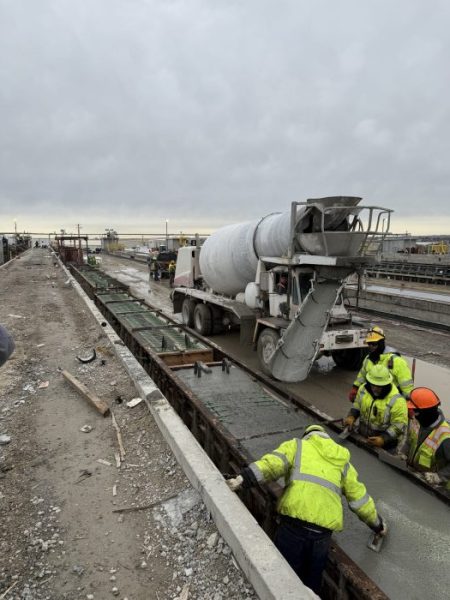
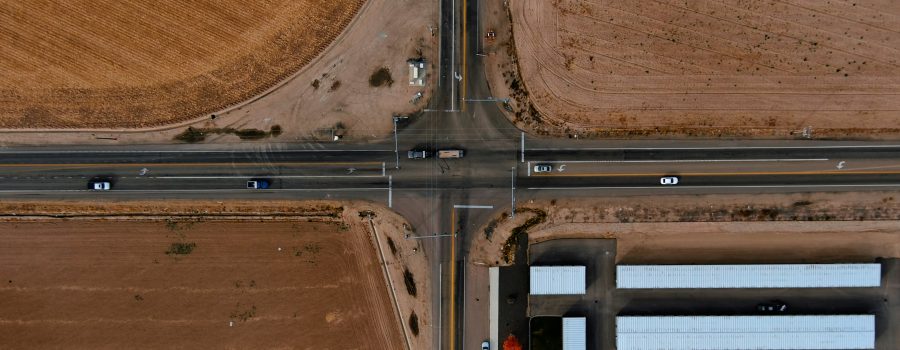
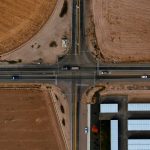
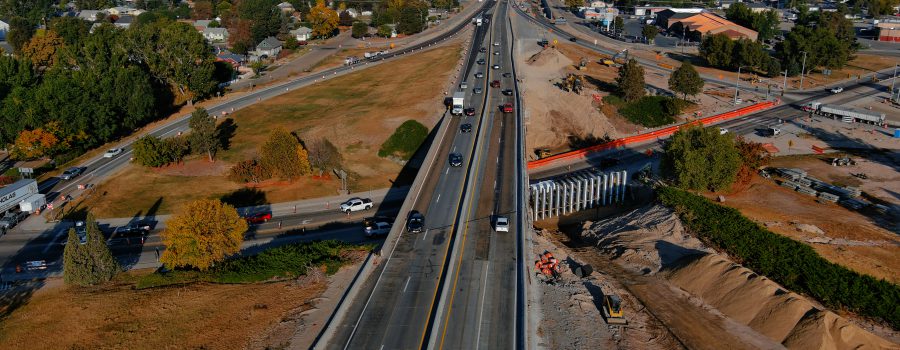
The Idaho Transportation Department will close Interstate 84 around the Karcher Interchange in Nampa starting this weekend to implement a traffic shift. This shift will allow crews to establish a safe work zone around the center pier of the bridge while maintaining the same number of lanes on I-84. Over the following weeks, crews will reinforce the interchange bridge to support the new westbound lane on Karcher Road (State Highway 55).
Here’s what to expect:
Full closure of westbound I-84 on Sunday, 9 p.m. – 5 a.m.
Full closure of eastbound I-84 on Monday, 9 p.m. – 5 a.m.
The Karcher Interchange project addresses the unprecedented growth in Canyon County by widening the interchange bridge, adding a free-running westbound right turn lane and an additional westbound lane through Caldwell Boulevard. Additional improvements will include:
Upgrading signal equipment and adjusting timing at ramp intersections
Adding a pedestrian flashing beacon at the I-84 eastbound on-ramp
Adding a new sidewalk/bike path west of Caldwell Boulevard on the north side of Karcher Road (SH-55)
Repaving Karcher Road (SH-55) from the westbound on-ramps to Middleton Road
This work is weather dependent and may be rescheduled if there is precipitation or temperatures drop too low. To learn more about the project or view detour maps, please visit the project website.
The Idaho Transportation Department will close 10th Avenue in Caldwell underneath the interchange bridge this Saturday, from 6 a.m. to 6 p.m. The closure is necessary for crews to install concrete girders that will support the new bridge deck.
The seven girders to be placed are made in Caldwell. Each girder is 140 feet long and weighs 133,000 pounds. Motorists will be detoured on Centennial Way during the closure, and shuttle buses will be available to transport pedestrians and bicyclists. Interstate 84 will not be impacted during this girder placement.
“Placing these girders is a major milestone in the project,” ITD Resident Engineer Styles Salek said. “The new bridge will accommodate the additional lanes being added to I-84, improving traffic flow and capacity in the area.”
This girder placement is part of the ongoing project on I-84 between the Centennial Way and Franklin Road interchanges in Caldwell. This comprehensive project, which began in November 2023, includes:
Widening I-84 to three lanes in each direction, with auxiliary lanes between interchanges.
Replacing the 10th Avenue Interchange.
Removing one westbound on-ramp at the 10th Avenue Interchange.
Updating the pedestrian overpass.
Building a sound wall along Hannibal Street.
Adding a traffic signal at the westbound ramps at the Centennial Way Interchange.
Drivers are reminded that the speed limit in the I-84 work zone is 55 mph. With workers, trucks, and heavy equipment operating close to traffic, ITD urges motorists to slow down, stay alert, and follow all posted signs.
Crews will close 10th Avenue underneath the interchange bridge on Saturday, March 8. This closure will give crews the space they need to place girders for the interchange bridge.
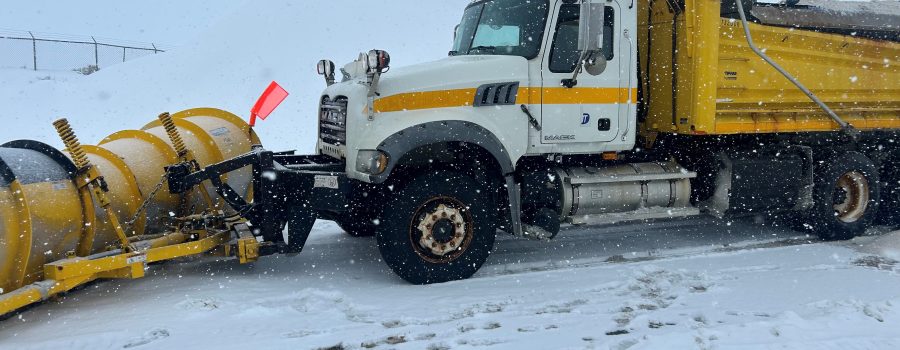
In preparation of more snow in the region, the Idaho Transportation Department will temporarily close U.S. Highway 20 from Anderson Dam Road to Hill City tomorrow (Feb. 12, 2025).
ITD crews will work to remove built-up snow and overhangs along the highway to improve safety and allow for more effective plowing. To protect workers and motorists, this stretch of US-20 will be closed from 11 a.m. to 5 p.m. during the snow removal effort.
“We understand this is an important route for many travelers, and our goal is to keep it as safe as possible. Clearing this snow now will make the highway safer for everyone, especially with more snowfall expected as early as Thursday,” Foreman Gabe Sielaff said.
Drivers should plan alternate routes and check 511.idaho.gov for the latest road conditions before traveling.
Sections of State Highway 55 between Farmway Road and Middleton Road will be closed beginning this Friday. The weekend closures will continue until March as part of the SH-55 widening project.
Each weekend, full closures will begin on Friday at 10 p.m. and continue until Monday at 5 a.m. Motorists are advised to plan ahead and allow extra travel time. Large vehicles traveling to Nampa and Caldwell should use alternate routes, including U.S. Highway 95 and State Highways 19, 78, and 45.
“The canal under-crossings need to be replaced to support the wider highway and this work must be completed before spring while irrigation canals and lines are empty,” ITD Project Manager Justin Wolf said. “We appreciate everyone’s patience and understanding.”
Update: The closure for SH-21 has been extended and now includes Idaho City (milepost 41) to Lowman (milepost 72).
The Idaho Transportation Department will close State Highway 21 from Grandjean to Banner Summit this afternoon due to high avalanche risk.
The current weather pattern is likely to trigger avalanches in this section of highway. The anticipated closure will begin at 5 p.m. today.
Motorists needing to use the roadway are advised to make the trip immediately or plan to use alternate routes, like State Highway 75.
The ITD avalanche crew monitors the snowpack along this section of highway to forecast the risk of avalanches large enough to reach the roadway. This practice allows the department to keep the highway open during the winter months with a reasonable confidence of safety for the traveling public.
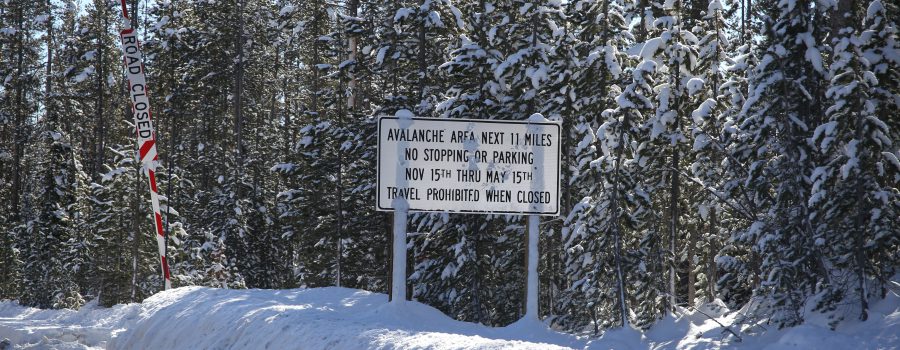
There are nearly 70 avalanche paths in this 11-mile stretch of SH-21. Avalanches can be triggered without warning, so there is no parking or stopping within this section of road during the winter.
The highway will reopen when the snowpack has stabilized and the risk of active avalanches is reduced. Updates on closures and openings will be posted on 511.idaho.gov.
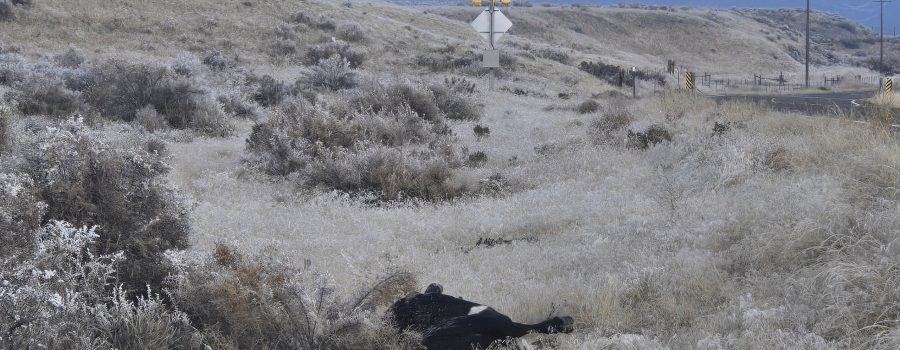
There are 14 open range signs on State Highway 51 from the Nevada border to north of Bruneau that flash when cows are near the highway. Despite these flashing alerts, livestock continue to be hit on this stretch, with four cows struck and killed in the past month alone.
Wilmer Biggs, a transportation technician with the Bruneau maintenance crew, says the highway serves mainly local traffic with drivers who could use a reminder of how collisions can affect them and the livestock. Biggs noted black cows are especially vulnerable to being struck because they are harder to see at night.
“I have come out the next morning after a cow was hit, and the baby is still standing by its dead mom,” Transportation Technician Wilmer Biggs said. “It’s tragic and can be avoided by slowing down and realizing this is an open range area. Drivers need to plan for cattle to be on this highway.”
Tips for driving in open range areas:
Reduce speed at night: Visibility is limited, and black cows can blend into the darkness.
Stay alert: Look for reflective eyes or movement near the road.
Plan ahead: Assume cattle may be present, especially in known open range areas.
Biggs previously transformed advisory signs from a defunct federal radio alert system into flashing open range signs and hopes to convert more in the future. Read about this past effort.
Open range cattle can be found on SH-51 and other Idaho highways year-round. Idaho is an open range state, meaning cattle and other livestock have the right of way. If livestock is hit on an open range, the owner of the animal is not liable for damages to the driver or the vehicle. Drivers may be liable for injuries or death of the animal if found to have been negligent.
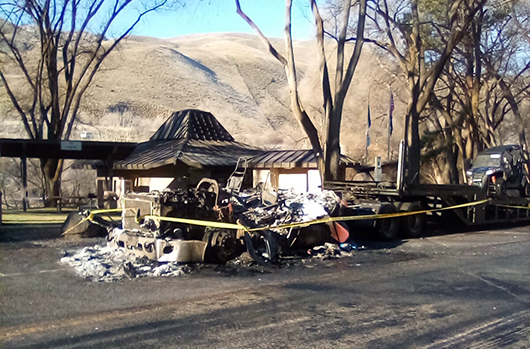
The Idaho Transportation Department has closed the Sheep Creek Rest Area on U.S. Highway 95 south of Riggins due to debris and spilled materials from a vehicle fire last night.
The rest area will remain closed until specialists can be contracted to remove an estimated 60 to 80 gallons of oil and engine fluids, which could take up to several days.
“We are closing the rest area to keep traffic from tracking the spilled materials onto the highway and creating slick road conditions,” Engineering Manager Bob Schumacher said. “Our buildings appear undamaged. We will reopen the rest area after completing assessments.”
The closest rest area for southbound travelers would be near Council and for northbound travelers near Winchester. Drivers should check 511.idaho.gov for updates on this closure.
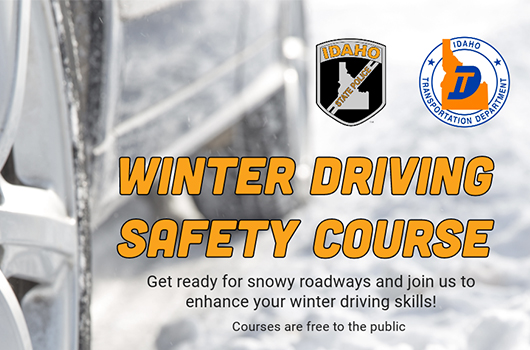
For the first time ever, the Idaho Transportation Department and the Idaho State Police are teaming up to offer free, informative, and engaging winter driving safety classes in the Treasure Valley to help drivers prepare for icy roads and snowy conditions. This new initiative is designed to help drivers of all ages and experience levels navigate Idaho’s winter roads safely.
With many new residents in the Treasure Valley, there’s an increasing need for education on how to handle winter driving conditions. While the course is open to all drivers, it is particularly geared toward young drivers and those new to the area who may be facing their first winter driving season.
The class will be taught by ISP troopers and ITD operators, covering a wide range of important topics, including:
An interim operational plan is now in place at the intersection of State Highway 16 and Substation Road in Emmett, following a crash in October.
On Oct. 16, a large truck collided with the traffic signal at this busy intersection, causing significant damage to both the foundation and the electrical conduit of the signal. As a result, the intersection has now reopened with an interim traffic pattern to ensure safety and mobility until the permanent repairs are made.
Under this interim operational plan, stop signs have been installed to facilitate traffic flow. Drivers can make the following movements:
Westbound SH-16 to Substation Road (right turn)
Eastbound SH-16 to Substation Road (left turn)
Drivers on Substation Road can only turn right onto the highway. Those wanting to cross the highway or go left will be detoured to South John Avenue. Rerouting traffic to a signalized intersection is best to mitigate safety risks at the intersection.
The Idaho Transportation Department anticipates that these interim measures will remain in place until late November. This timeframe will allow for the ordering of new parts, as well as the demolition and reconstruction of the foundation, and to restore the electrical connections.
ITD appreciates the public’s patience and encourages drivers to always check their route at 511.idaho.gov.
The Idaho Transportation Department will close the Interstate 84 westbound on- and off-ramps at the 10th Avenue Interchange beginning Monday evening. These nighttime closures will allow crews to work on the storm sewer under 10th Avenue and the westbound ramps.
Here’s what to expect:
The 10th Avenue westbound on-ramp will close on Monday and Tuesday nights (Nov. 4 & 5) from 10 p.m. to 5 a.m.
The 10th Avenue westbound off-ramp will close on Tuesday and Wednesday nights (Nov. 5 & 6) from 10 p.m. to 5 a.m.
Flaggers will direct traffic on 10th Avenue at nighttime under the 10th Avenue bridge from 7 p.m. to 5 a.m.
During this work motorists will drive on a gravel surface on 10th Avenue.
Detours will be in place for ramp closures. Click here to view detour maps.
Motorists can expect intermittent local road closures, lane closures and ramp closures throughout the duration of the project. Construction is anticipated to be completed in 2027.
For more information about the project and to sign up for updates:
ITD values the safety of crews and motorists. Please use caution when driving through the work zone. To plan your route in advance, visit 511.idaho.gov.