
Overview
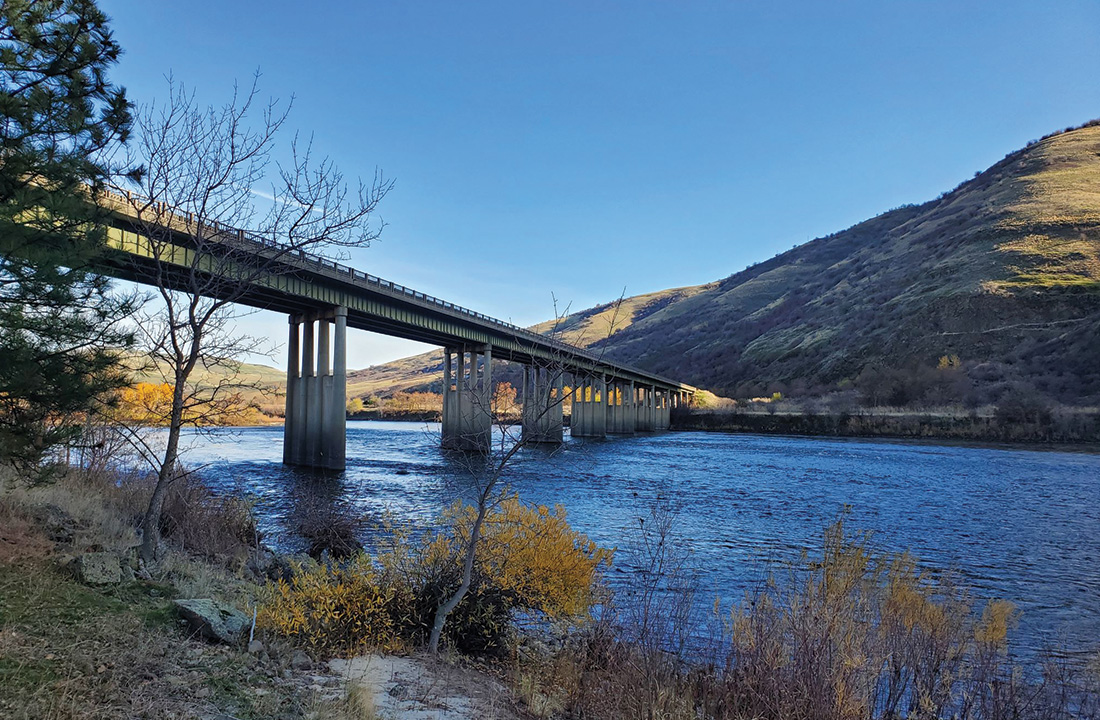
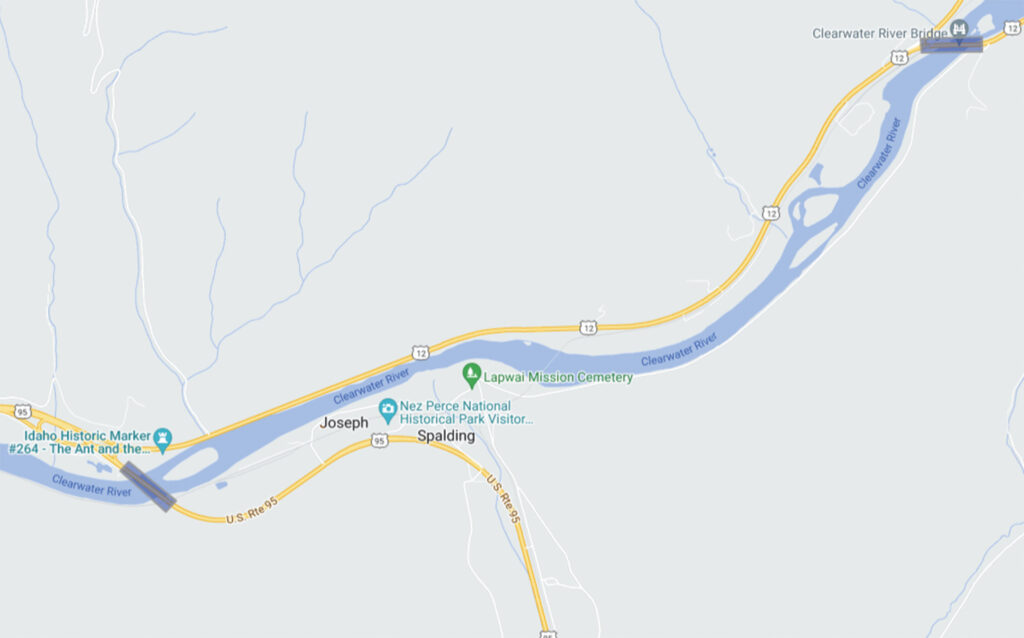
The Clearwater River crossings at US-95 Spalding Bridge and US-12 Arrow Bridge are important regional connections for drivers and the trucking and logging industries.
ITD is designing upgrades for these bridges to improve traffic flow and enhance safety.
Both bridges and their associated highway intersections require improvements to meet current design and safety standards and provide updated bridges to last for many years to come. Each bridge has a unique environmental study underway evaluating improvements and considerations including wetlands, cultural and historical resources, right of way, noise, and fisheries. Design of the proposed changes is underway, with construction to follow.
Spalding Bridge
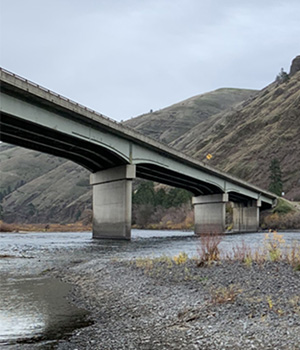
Spalding Bridge is approximately 9 miles east of Lewiston on US-95 at milepost 304 and was built in 1962. ITD is replacing the existing bridge with dual bridges creating two lanes of traffic in each direction with improved lane and shoulder widths.
Additionally, ITD is making operational and safety improvements at the US-95 and US-12 interchange.
Arrow Bridge
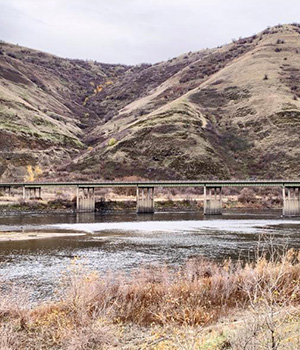
Arrow Bridge is approximately 13 miles east of Lewiston on US-12 at milepost 15 and was built in 1972. ITD is replacing the existing bridge with a new two-lane bridge with wider lanes and shoulders. Additionally, ITD is reconfiguring the nearby US-12 and SH-3 intersections to enhance traffic flow and improve safety between the two highways.
Safety Benefits
The bridges, built over 50 years ago, require upgrades to accommodate current and future traffic demands. Widening the bridges will enhance traffic flow. Additional improvements, including wider shoulders, smoother curves, better sight lines, and dedicated turn lanes, will significantly increase safety for all bridge users.
Timeline
The environmental studies of the Clearwater Crossings at Spalding and Arrow projects started in late 2021. The goal of each study is to ultimately secure an approved National Environmental Policy Act (NEPA) document. This approval will allow ITD to make improvements to the bridges and nearby intersections after considering the environmental impacts and input from the public, stakeholders, and partners.
Pending NEPA approval and identification of funding, construction of the Arrow Bridge project could begin in 2029.
As of June 2025, funding was identified for Spalding Bridge. Construction is anticipated to begin early 2028.
During construction of the new structures, the existing bridges would remain open to vehicles.
-
Underway
Design for each bridge and nearby intersections.
-
2026 – 2031
Construction lasting multiple construction seasons.
Community Involvement
ITD hosted a public meeting in November 2023 to share information about the environmental study and preliminary designs for both crossings and gather feedback. Public comments ITD received were focused in two areas:
- Safety & Design: Speed limits, project design features, pedestrian features, merging the new design with existing roadways
- Process: Project need and selection, right of way, Tribal Employment Rights Ordinance (TERO), public meeting format
Responses to public comments are documented in the Frequently Asked Questions below. See the Public Meeting Summary for more information.
You can stay up to date on the projects by signing up for email updates here.
Funding
These studies are being funded with Transportation Expansion and Congestion Mitigation (TECM) funds as part of Governor Little’s Leading Idaho initiative. The program allows ITD to accelerate project timelines to address rapid growth and build critical infrastructure today that would otherwise take many years to fund and build.
For more information on the TECM program, visit itd.idaho.gov/funding.
Frequently Asked Questions
SAFETY & DESIGN
The Idaho Transportation Department (ITD) does not plan to decrease the speed limits. Speed limits on key routes are reviewed every other year and are set based on the speed most drivers are traveling. Additionally, the new project designs for both bridges and the associated highways have been developed to support the current speeds. Artificially reducing the speed limit requires the consistent presence of law enforcement and proves to be less safe than allowing traffic to flow consistently.
The Spalding bridge design will:
- Replace the existing narrow bridge with dual bridges, creating two lanes of traffic in each direction with improved shoulder widths
- Reconfigure the US-95 and US-12 interchange
- Provide additional vertical clearance on the US-95 bridge over US-12
- Provide dedicated turn lanes onto Mullay Road and Sampson Road
- Update signage
The Arrow bridge design will:
- Replace the existing bridge with a new two-lane bridge with wider shoulders and a center median
- Reconfigure the nearby US-12 and SH-3 intersections
- Provide a safer opportunity for turning onto Awesome Lane
- Update signage
Proposed changes to the bridges and nearby highway intersections would improve traffic flow and enhance safety for present and future roadway users. The benefits include:
- Wider shoulders with room for bicyclists, pedestrians, and space for emergency responders
- Smoother curves at intersections that are easier to navigate for towing vehicles and logging trucks
- Increased sight lines and longer merging distances improve safety
- Dedicated turn lanes improve traffic flow
The projects have been designed with outside shoulders that are 10 feet wide to enhance safety and provide room for all users, including bicyclists, pedestrians, and emergency responders.
ITD understands that these projects are part of a larger roadway network that can only be improved incrementally. Being built over 50 years ago, the Spalding Bridge structure needs improvements to meet current design and safety requirements now. The Transportation Expansion and Congestion Mitigation (TECM) program provides a unique opportunity for ITD to address these critical infrastructure needs and build a bridge that is appropriately sized for anticipated traffic counts in the next few decades. Additionally, having four lanes over Spalding provides a safe opportunity for bridge maintenance and inspection while maintaining mobility for the traveling public.
PROCESS
The Spalding and Arrow bridges were built over 50 years ago and require improvements to meet current design and safety standards. The environmental evaluations, which include preliminary design concepts for each bridge, were chosen to be funded through the TECM program, not only because of the infrastructure needs, but also because they are important regional connections for commerce.
The TECM program is part of Governor Little’s Leading Idaho initiative that allows ITD to accelerate project timelines to address rapid growth and build critical infrastructure today that would otherwise take many years to fund and build. Construction is not currently funded for either bridge.
Property owners are consulted during the design process, including an initial contact when all impacts may not be known or for certain. Communication continues throughout the design process until it is ready to be constructed. Before land or easements are purchased, independent appraisals will be conducted, and owners will have the chance to negotiate. The department pays fair market value for impacts.
The right-of-way section of ITD is responsible for the acquisition of all property required for highway construction, material sources, and maintenance shed sites. For more information about the ROW process, please visit itd.idaho.gov/row.
With Spalding and Arrow Bridges both being located on the Nez Perce Reservation, the Tribal Employment Rights Ordinance (TERO) requires that employers give employment preference to qualified Native Americans if the project receives federal funding. ITD encourages interested tribal members to contact the applicable TERO Office itd.idaho.gov/civilrights for further information or call the ITD Office of Civil Rights, 208-334-8884.
The public meeting was designed in an open house format to allow participants to navigate the display materials on their own timeline and ask questions as they pleased. The meeting was intended to provide information about the environmental study process and preliminary bridge and roadway designs for both the Spalding and Arrow project areas.