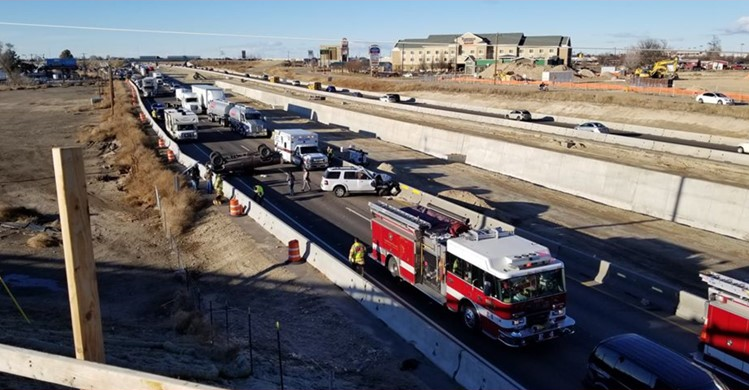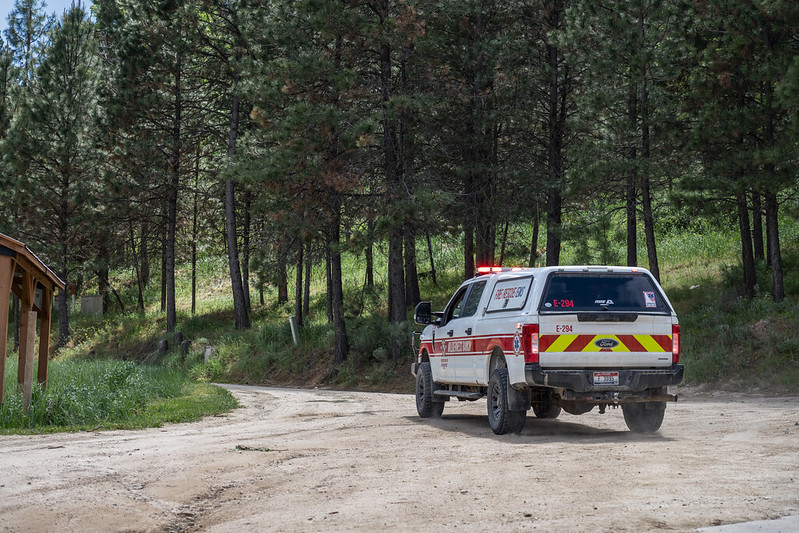
By increasing outreach and awareness of TIM practices, the program can increase the reliability of Idaho roadways and the livability of our communities. Multiple response agencies work together to respond to highway incidents including; law enforcement, fire fighters, transportation workers, emergency medical services, towing, public works, and haz-mat workers. Traffic Incident Management:
- Saves Lives: Crashes and “struck-by” incidents continue to be a leading cause of on-duty injuries and deaths for public safety responders and support teams responding to highway incidents.
- Saves Time: Traffic incidents are a contributing factor to congestion in the U.S. For every minute a freeway lane is blocked due to an incident, it results in four minutes of travel delay.
- Saves Money: Less time spent in backups, fewer secondary crashes and fewer insurance claims means less financial loss due to highway incidents.
Training for Traffic Incident Management
The TIM Responder Training Program was developed by responders for responders on the national level, and was designed to promote consistent training of all responders to achieve the three objectives of the TIM National Unified Goal:
- Responder safety
- Safe, quick clearance
- Prompt, reliable, interoperable communications
National TIM Responder Training Program
Traffic Incident Management consists of a planned and coordinated multi-disciplinary process to detect, respond to and clear traffic incidents so that traffic flow may be restored as safely and quickly as possible. TIM Responder Training brings together personnel across the responder spectrum to build a stronger, more coordinated corps at the local and national level.
TIM Training is federally developed and delivered across the nation. It is developed by FHWA and offered in partnership with AASHTO, the national TIM training curriculum is pilot-tested and based on best TIM practices and advanced standards. To date more than 335,000 TIM Responders across the U.S. have received the training.
- TIM Training is customizable. Training can be delivered in its entirety or through select modules in almost any setting.
- Traffic Incident Management is accepted by the Idaho EMS Bureau as continuing education.
TIM training has been endorsed by the following national associations: American Association of State Highway and Transportation Officials (AASHTO), American Public Works Association (APWA), Cumberland Valley Volunteer Firemen’s Association (CVVFA), Division of State Associations of Chiefs of Police (SACOP), Institute of Transportation Engineers (ITE), Intelligent Transportation Society (ITS) of America, International Association of Chiefs of Police (IACP), International Association of Directors of Law Enforcement Standards and Training (IADLEST), International Association of Fire Chiefs (IAFC), International Association of Fire Fighters (IAFF), International Municipal Signal Association (IMSA), National Association of State EMS Officials (NASEMSO), National EMS Management Association (NEMSMA), National Sheriffs’ Association (NSA), National Volunteer Fire Council (NVFC), Towing and Recovery Association of America (TRAA), and Transportation Research Board (TRB).