
Air Quality
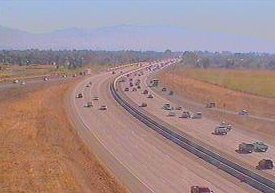
Air Quality impacts are evaluated for all Idaho Transportation Department (ITD) federally funded transportation projects to determine if the project will cause or contribute to a violation of National Ambient Air Quality Standards. ITD’s mission is to improve air quality by ensuring all ITD projects and operations comply with federal, state and local air quality laws and regulations, and by promoting strategies which reduce emissions of motor vehicle pollutants.
Regulations and Guidance
Socioeconomic & Community Resources
Social characteristics, community resources, and economic conditions are factors that affect quality of life. The socioeconomic and community environment can be described with the demographics of a community, the resources within the community (e.g., schools, churches, parks, and services), and the local and regional economic conditions of the community. The purpose of socioeconomic and community resources analysis is to determine the effects a project may have on the community: the neighborhoods, business, and services as a whole, and to ensure the impacts to people and communities are included in the decision-making process for transportation projects.
Resources
-
Feb. 2025
HazMat
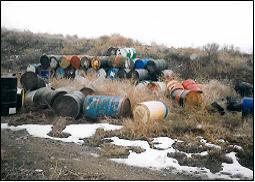
The Idaho Transportation Department must conduct hazardous materials investigations for any property ITD owns, manages, plans to sell, or plans to purchase. If hazardous materials are found to be present on ITD property, federal and state environmental laws requires ITD to cleanup and properly dispose of all hazardous materials regardless of whether the original source is from ITD activities, from a tenant, or inherited when property is acquired.
ITD seeks to identify hazardous materials early in the project development process through thorough investigations to reduce liability and to minimize delays. Advantages to this identification process include:
- Minimizing potential dangers to ITD and other personnel
- Protecting the environment from exposure to or spread of hazardous materials
- Minimize design and construction costs due to potential project delay or termination
- Reduce adverse publicity
HazMat Investigations are conducted in the following steps:
Administrative Review
Required on all projects with the exception of Tier I Minor Projects.
- Use the Terradex Idaho site to conduct a project area “radius search”, with the search radii below in mind (a 1-mile radius is recommended).
- This is intended as a review of published lists to determine if there are any documented HazMat sites, underground storage tanks or contaminated groundwater within or adjacent to the project area.
- Review the topography, groundwater levels and flows in the project area.
- Determine whether the site conditions warrant further investigation.
- Where warranted, the appropriate resource agencies are contacted (contact information is provided on the Terradex map at each site)
- If there is a potential risk, a Phase I or Phase 2 must be completed
| List Name | Abbreviation | Search Radius | Agency Contact |
|---|---|---|---|
| FEDERAL LISTS: | |||
| National Priorities List (Superfund) | NPL | 1 mile | EPA |
| Comprehensive Environmental Response, Compensation, and Liability Information System | CERCLIS | ½ mile | EPA |
| CERCLIS No Further Remedial Action Planned | CERC-NFRAP | ½ mile | EPA |
| Corrective Actions on Resource Conservation and Recovery Act Information Treatment, Storage and Disposal Sites | CORRACTS RCRA-TSD | 1 mile | EPA |
| Corrective Actions on Resource Conservation and Recovery Act Information Non-Treatment Storage and Disposal | CORRACTS RCRA non-TSD | ½ mile | EPA |
| RCRA Generators | RCRA | W/in or adj to ROW[1] | EPA |
| Emergency Response Notification System | ERNS | ROW only | EPA |
| STATE LISTS: | |||
| Solid Waste Management Facilities/Landfill Facilities | SWF/LF | ½ mile | Health Dept |
| Underground Storage Tank | UST | W/in or adj to ROW | DEQ |
| Leaking Underground Storage Tank | LUST | ½ mile | DEQ |
| Other | 1 mile | DEQ |
Initial Site Assessment – (Phase I)
- Determines whether there is a potential HazMat risk
- Complete a Records Review of maps and historic documents to obtain information to help identify hazardous environmental conditions
- Perform a Site Reconnaissance to inspect property and any structures on the project for recognized hazardous environmental conditions
- Conduct Interviews with property owners or site managers to obtain information about possible hazardous environmental conditions that confirms information previously obtained or identifies new information
Preliminary Site Investigation – (Phase II)
- Confirm whether HazMat is present and extent of contamination
- Soil and water samples taken and analyzed
- Reports written to discuss physical environment and its relationship to potential contamination, sampling techniques, analysis results, health and safety considerations, identification of any contamination if found, conclusions, and remediation strategy and costs
Detailed Site Investigation – (Phase III)
- Conducted when existence of HazMat on the project site is confirmed
- Includes the Site Investigation, Remedial Action Plan and remediation
- Approximate clean up time can vary from 6 months to several years
- Authorization of a Phase III investigation will be coordinated through the Headquarters Environmental Services Manager
Additional information can be found under “1400 Hazardous Materials” in the ITD Environmental Process Manual.
Noise
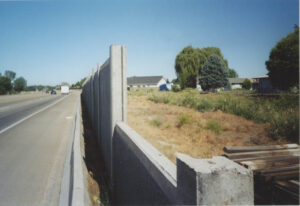
Traffic Noise is increased by heavier traffic volumes, higher speeds and a greater percentage of trucks. ITD environmental studies involving major highway improvements must analyze existing noise levels and predict future noise levels to determine noise impacts. All traffic noise studies prepared for ITD projects must adhere to procedures and requirements as established by federal law, Federal Highway Administration (FHWA) regulations, and ITD noise analysis guidelines.
Noise Forms
-
ITD-1055 Form
-
ITD-1056 Form
-
ITD-1057 Form
Additional information concerning the Noise Policy can be found under “1300 Noise” in the Environmental Process Manual.
Primary Contact
Ester Ceja
NEPA, human and physical environment, PELs