
Overview
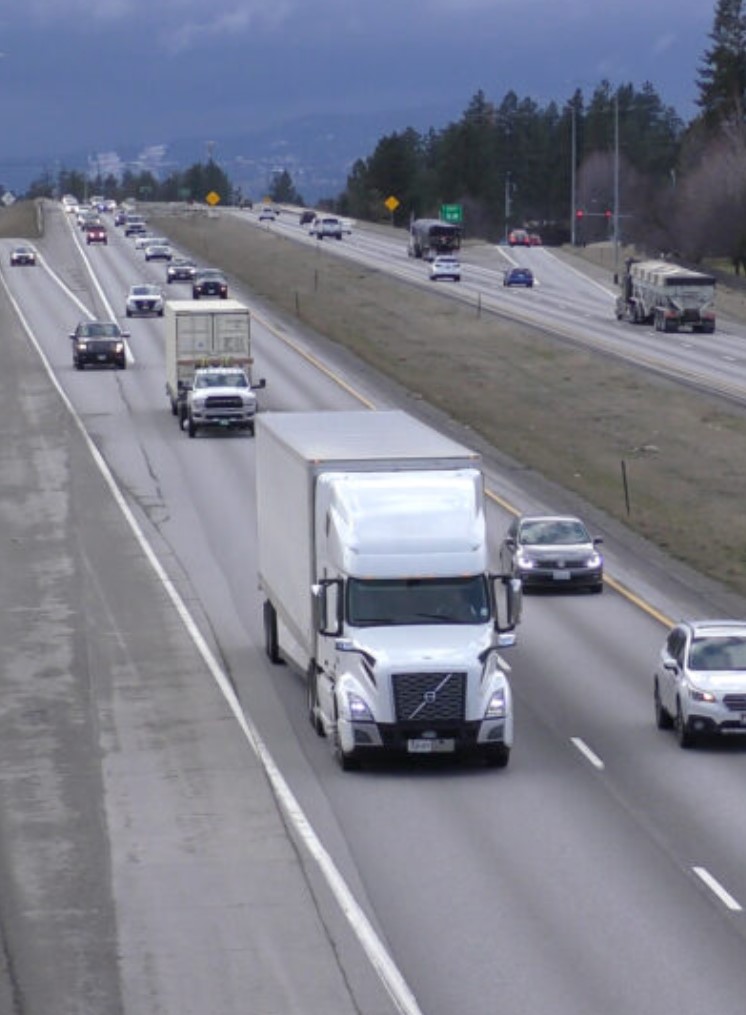
With traffic conditions congested now, and volumes expected to double by 2045, ITD is studying the I-90 corridor from Washington state line to Post Falls to identify improvements to modernize the system, reduce crashes and save drivers’ time.
Congestion causes delays and increases the risk for crashes, especially rear-end crashes. Traffic volumes on I-90 are growing along with the population, and updates to I-90 are needed to keep up with traffic demands.
As the I-90 corridor spans nearly 16 miles of interstate, including many bridges, and interchanges, ITD has split the corridor into two areas for the public to more easily find the projects most relevant to them. The sections are:
- Washington State Line to State Highway 41
- SH-41 to 15th Street
Projects within these areas will then be prioritized and advanced into design and construction as funding becomes available.
The western section of the I-90 corridor, from the Washington state line to SH-41, is on hold until additional funding is identified to complete the remaining analysis and propose recommendations. Funding for the construction of the entire corridor has not been identified. A previously funded project to redesign the SH-41 Interchange is currently under construction and expected to be completed in 2026. A project to widen I-90 from SH-41 to US-95 began construction in 2025 and will be complete in 2029.
Proposed Changes
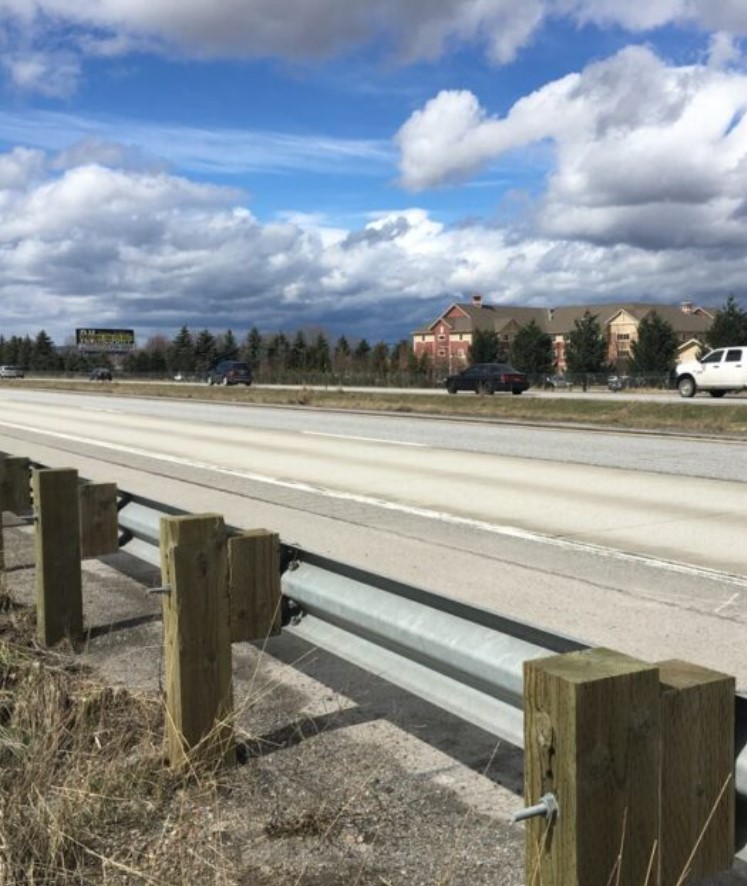
The Washington state line to SH-41 section of the I-90 Corridor study includes changes to the number and spacing of interchanges and widening on I-90 with a minimum of three lanes in each direction. At the open house and during the public comment period in November 2022, two alternatives were presented for the Post Falls area. Details of each are below with links to view PDFs of the designs.
These alternatives, with public feedback under consideration, are being deliberated by ITD, the city of Post Falls, and other stakeholders.
Post Falls Alternative A
Primary features of Post Falls Alternative A include:
- Modify the ramps at the Spokane Street Interchange and widen Spokane Street
- Add ramps to make a full interchange at Seltice Way
- Additional lane between Spokane Street and Seltice Way Interchanges
View a flyover of the design in the video to the right.
Post Falls Alternative B
Primary features of Post Falls Alternative B include:
- Remove the Seltice Way Interchange
- Add new interchanges at Idaho Road and Syringa Street
- Build new collector-distributor road between Spokane Street and Syringa Street
View a flyover of the design in the video to the right.
Safety Benefits
Widening the interstate will allow for better flow of traffic, eliminating stop-and-go conditions that result in rear-end crashes. With more lanes available, drivers wouldn’t need to make last-minute, unpredictable lane changes to jockey for better positioning.
Ramps will be lengthened and brought up to standard, allowing more time to merge safely. Drivers will also be able to address emergency issues with wider shoulders that put more space between them and high-speed traffic, as well as allow for better response time for emergency services during crashes.
Community Involvement
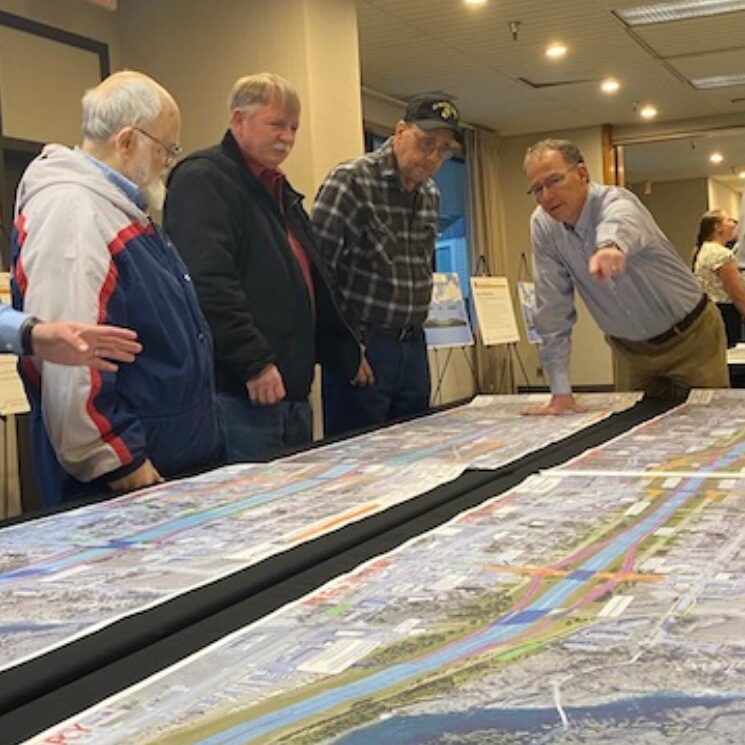
ITD hosted two in-person public meetings, each covering the entire corridor, in Post Falls and Coeur d’Alene in November 2022. Prior to the public meetings, ITD met with key stakeholders and local governmental officials to inform the concept designs that were presented to the public. ITD also hosted a virtual public meeting for those unable to attend in person to see the same information presented at the meetings. Public comments and feedback have been analyzed and will be considered by the project team as the design is refined.
The feedback gathered from both open houses and online surveys is also currently being incorporated into subsequent designs. Due to the length and complexity of the corridor, ITD divided the overall corridor study into two sections: Washington State Line to SH-41 and SH-41 to 15th Street.
The SH-41 to 15th Street section of the I-90 corridor study include the areas of highest growth and congestion, resulting in it being developed first.
Funding
This study is being funded with Transportation Expansion and Congestion Mitigation (TECM) funds as part of Governor Little’s Leading Idaho initiative. The program allows ITD to accelerate project timelines to address rapid growth and build critical infrastructure today that would otherwise take many years to fund and build.
The corridor is one of 13 approved TECM corridors in the state. Funding for future design and construction of the entire corridor has not been identified but will be determined based on project readiness and funding availability.
Preliminary estimates value the improvements needed in this corridor at $1 billion to $1.2 billion, which includes design, right of way and construction costs. The State Line to Post Falls section accounts for $300 million to $370 million of that total estimate. Work will likely be completed in stages over many years.

Frequently Asked Questions
Feedback and comments from the public collected during our open houses and via the online survey were incorporated into the concept designs where possible.
Currently, the I-90 corridor project’s primary focus is I-90 widening between Post Falls and Coeur d’Alene. Additional projects will be advanced through the design and construction process based on priorities identified in the traffic analysis.
The 15-mile corridor will be prioritized for design and construction as funding is identified. The highest priority section, widening I-90 from SH-41 to Northwest Boulevard, began construction in 2025.
The two design alternatives presented at the November 2022 open houses were again deliberated by the design team with the feedback the public provided. A preferred alternative has not been selected at this time.
As the interstate exists today, if the Idaho side of the freeway widens to three lanes, a bottleneck would be created at the border.
As the project designs are finalized, ITD and the Washington State Department of Transportation will remain in close contact and will coordinate to maximize traveler mobility and safety. No matter the number of lanes on the Washington side, the Idaho side would be widened as it would relieve more congestion points in Idaho.
Priorities for corridor improvements are focused on the urban areas of Coeur d’Alene and Post Falls as this is where traffic is heaviest, and relief is needed the most. In order of current priority, widening I-90 to the Washington state line may be one of the last improvements to be implemented.
A collector-distributor road, or a C-D road, separates freeway through traffic from other vehicles entering or exiting the freeway, making it safer for drivers to enter and exit in congested areas with tightly spaced interchanges.
With a C-D system, rather entering an on-ramp and immediately accessing the freeway, drivers will first enter a parallel roadway that “collects” vehicles from several on-ramps and then rejoins to the freeway at a less-congested area where it is easier to merge. This same parallel roadway also “distributes” traffic to off-ramps.
Collector-distributor roads are proposed from US-95 to Fourth Street and in Alternative B in the Post Falls area.
Yes. Determination of noise walls is a two-part process and falls within both the study (current) and design (next) phases. In our current study phase, ITD will soon begin a noise analysis to determine locations where noise walls are feasible.
If a noise wall is shown to be feasible in the study phase, ITD is required in the design phase to ballot the benefited recipients to determine whether the noise wall is desirable to construct. When the noise wall analysis is complete, ITD will proactively notify residents and property owners to share information directly. The noise wall analysis will also be presented at future open houses.
This study is being funded with Transportation Expansion and Congestion Mitigation (TECM) funds as part of Governor Little’s Leading Idaho initiative. The program allows ITD to accelerate project timelines to address rapid growth and build critical infrastructure today that would otherwise take many years to fund and build.
The corridor is one of 13 approved TECM corridors in the state. Funding for the future design and construction phases on this corridor will be determined based on project readiness and funding availability.
Preliminary estimates value the improvements needed in this corridor at $1 billion to $1.2 billion in 2022 costs, which includes design, right of way and construction costs. Work will likely be completed in stages over many years.
The new interchange at SH-41 has been in design since October 2017 and was funded for construction when the project was ready to be advertised in 2022. The interchange project was designed to be compatible with anticipated future needs, like expansion.
The goal of this study is to identify capacity and safety improvements on I-90, including geometrics, improved on- and off-ramps, and interchanges needed to accommodate future growth. The study began in 2021 with funding from Leading Idaho.
This study is funded by the Transportation Expansion and Congestion Mitigation bonding program, which was established by the Idaho Legislature to allow the department to quickly design projects to address rapid growth and build critical infrastructure today that would otherwise take many years to fund and build.
The study focuses on expanding the interstate, with impacts anticipated to the Centennial Trail as a result of widening. The project team has met with the Centennial Trail Foundation and other advocates of alternative transportation like the City of Coeur d’Alene Walk/Bike Alliance to maintain connectivity.
This study is not scoped to consider light rail or other mass transition options, though the idea of connecting Spokane, Washington, with Coeur d’Alene, Idaho, has been discussed. Ultimately, the state of Idaho provides very minimal dedicated funding for public transportation. With little state funding, required match money for federal opportunities must come from cities, counties, etc. There is no enabling legislation that allows local areas to approve a local funding option that could support the initial capital and ongoing operational costs of light rail.
Significant resources are needed to build light rail or high-capacity transit networks. In the early 2000s Spokane Transit Authority studied light rail, and the report estimated a rail line between Spokane and Liberty Lake to cost $226 million. A more recent study in 2020 by the Community Planning Association of Southwest Idaho, known as COMPASS, estimated that regional rail between Boise and Caldwell would cost $800 million.
Contact the project team
For questions or comments about this project, please contact the project team at info@i90corridor.com or (208) 738-4190.
Sign up for email updates
Stay informed about key information and updates as a part of this I-90 study!